《能源AI智能巡检应用研究报告》重磅发布!有云数智联合多方共绘能源智能化新蓝图
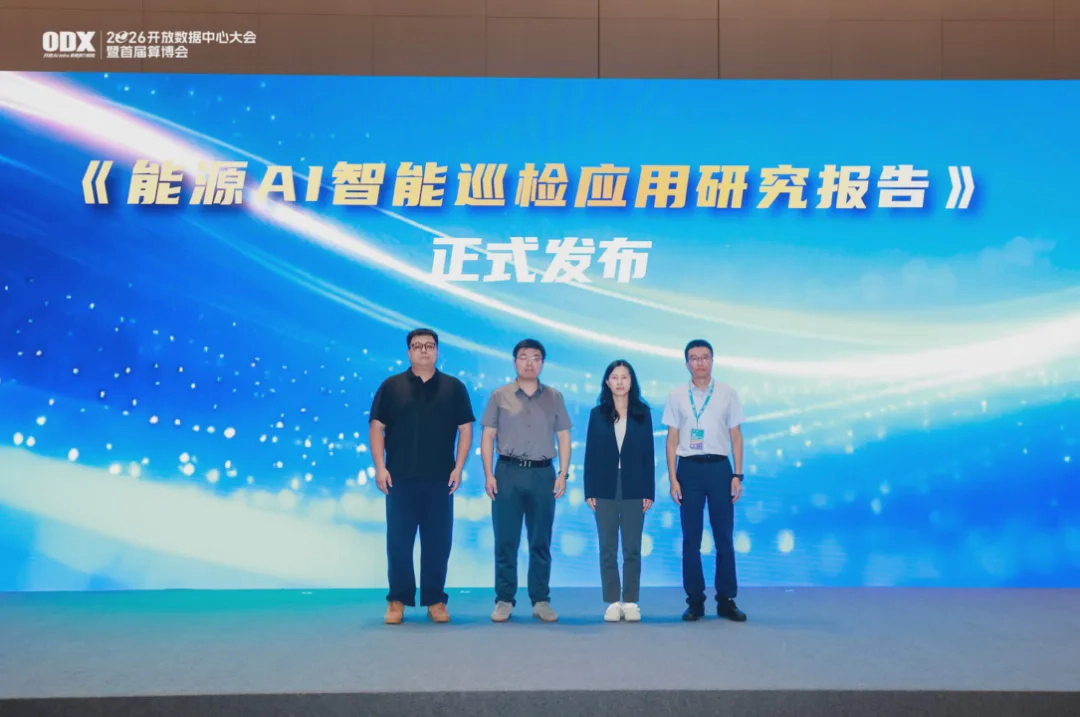
On September 4, the 2026 Open Data Center Conference and the First Computing Expo kicked off in Beijing. At the conference, the Energy AI Intelligent Inspection Application Research Report was officially released, adding another major achievement to the energy inspection industry.
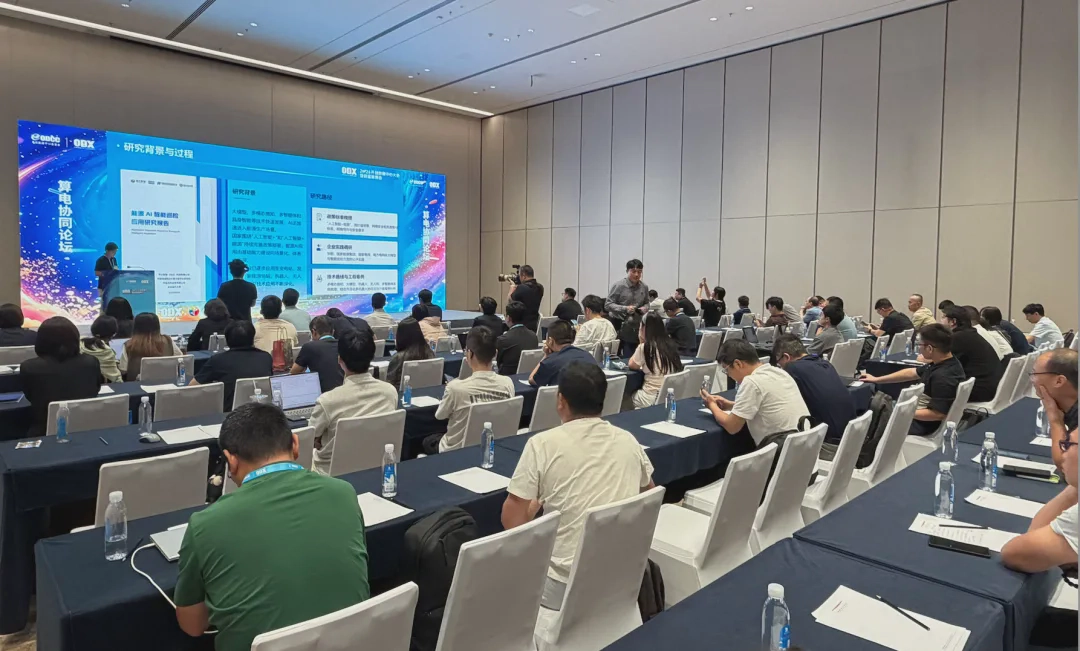
Strong alliance, jointly released.
This report was led by Youyun Digital Intelligence and jointly prepared with the China Academy of Information and Communications Technology, Huaneng Jilin Power Generation Co., Ltd., and Northeast Electric Power University, under the guidance of the Jilin Provincial Energy Bureau.
At the launch ceremony, Jiang Qi, Chairman of Youyun Shuzhi, together with leaders from the Cloud Computing and Digitalization Research Institute of the China Academy of Information and Communications Technology, Huaneng Jilin Power Generation Co., Ltd., and Northeast Electric Power University, jointly took the stage to witness the official release of the report.
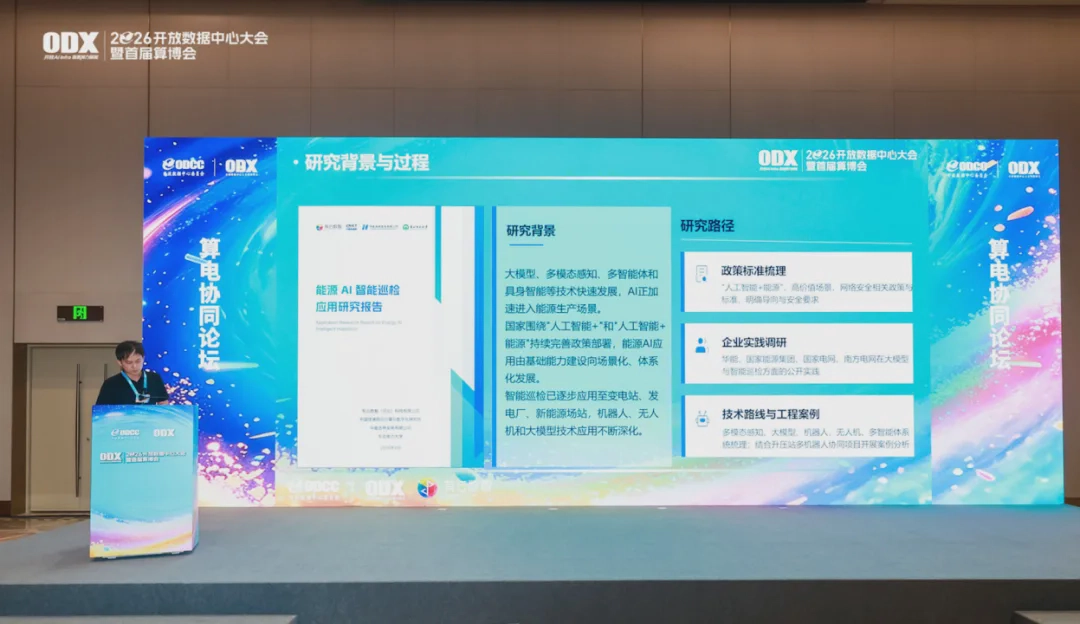
Zhao Zhilong, Vice President of YouCloud Digital Intelligence, provided a comprehensive interpretation of the report, offering in-depth explanations of its core viewpoints and industry value.
Report Highlights at a Glance
✅ Grounded in industry realities, conducting in-depth frontline research, and closely focusing on the real pain points of energy inspection.
✅ A panoramic technology review, systematically presenting the technological status, application scenarios, and common challenges of AI-powered intelligent inspection in the energy sector.
✅ Innovatively proposed the Y-ICF integration framework—providing an actionable and replicable pathway reference for the industry to move from “standalone intelligence” to “system collaboration” and achieve large-scale implementation.
Authoritative support, deep integration of industry, academia, research, and application.
The successful preparation of this report would not have been possible without the tripartite synergy of “the strategic vision of think tanks + the practical depth of leading enterprises + the academic depth of universities.”
China Academy of Information and Communications Technology (CAICT): As a national-level scientific research institution directly under the Ministry of Industry and Information Technology, CAICT has significant industry influence in cloud computing, big data, and artificial intelligence. This time, its Institute of Cloud Computing and Digitalization deeply participated in framework design and quality control, providing solid support for the scientific rigor of the report.
Huaneng Jilin Power Generation Co., Ltd.: As a key power generation enterprise of China Huaneng Group Co., Ltd. in Northeast China, Huaneng Jilin Power Generation Co., Ltd. contributed to the report frontline practical experience in intelligent inspection at high-cold and remote stations, enhancing the scenario adaptability of the technical solution.
Northeast Electric Power University: From the perspective of integrating industry, academia, and research, the university team provided solid theoretical support and technical validation support for the report.
For Youyun Shuzhi, leading the effort to unite such a strong lineup in compiling the report is not only a reflection of the company's technological accumulation, but also a powerful testament to its industry influence.
Directly addressing pain points: from “standalone intelligence” to “system collaboration”
As the "AI + Energy" policy continues to be implemented, the industry is facing unprecedented transformation opportunities. According to relevant arrangements by the State Council and the National Energy Administration, by 2027, an integrated innovation system for energy and artificial intelligence will have been initially established, promoting the deep application of more than five specialized large models in power grids, power generation, and other industries.
However, behind the rapid entry of robots, drones, and large models into substations and renewable energy stations, the industry's pain points are becoming increasingly prominent:
The limitations of single-machine intelligence have been repeatedly verified, but when multiple pieces of equipment, multiple models, and multiple systems appear in the same scenario at the same time, "who commands whom," "how to coordinate," and "who provides the fallback" become real-world challenges.
Energy intelligent inspection is at a critical crossroads—it must move from “standalone intelligence” to “system-wide collaboration,” and from “project-based customization” to “large-scale replication.”
Core Solution: Y-ICF Establishes a Full-Chain Closed Loop
To address the above pain points, a core contribution of the report is proposing the Y-ICF Energy Intelligent Inspection Integrated Framework.
This framework constructs a four-layer capability architecture of "perception—cognition—collaboration—execution," and integrates security governance mechanisms throughout the entire task process. Its core values include:
Compatibility — compatible with existing robots, algorithms, or large models;
Strong connectivity — with agents as the core link, connecting scattered perception data, cognitive reasoning, task scheduling, and on-site execution into a complete chain;
Safety — ensuring operations run within established safety boundaries.
The report carried out engineering verification based on the multi-robot collaborative duty project at a step-up substation. By integrating technologies such as large models and voiceprint analysis, the project enabled humanoid robots and quadruped robots to divide work and collaborate according to their capabilities, successfully verifying the feasibility of multi-equipment collaborative inspection transitioning from theory to engineering application.
Looking ahead to overcome the challenges of scaling and replication.
The report points out that the industry currently faces three major common challenges:
(1) High requirements for collaborative reliability in complex environments;
(2) Differences in stations and depots make cross-scenario replication difficult;
(3) The authority for autonomous decision-making and the human takeover mechanism are not yet fully developed.
In response, the report gives a clear path to break the impasse: strengthen system collaboration capabilities, advance standardization, strictly uphold the safety bottom line, and promote the deployment of large models and intelligent agent devices. Ultimately, this will achieve an upgrade from individual technological breakthroughs to system capability building, move from scattered customization to large-scale replication, and advance toward safe and reliable collaborative intelligence.
As the lead drafting organization, YouCloud Digital Intelligence will work with participating drafting organizations such as CAICT, Huaneng Jilin Power Generation Co., Ltd., and Northeast Electric Power University to continuously carry out engineering validation and iteration of the Y-ICF framework, driving energy intelligent inspection from "usable" to "easy to use" and from "standalone intelligence" to "system collaboration."
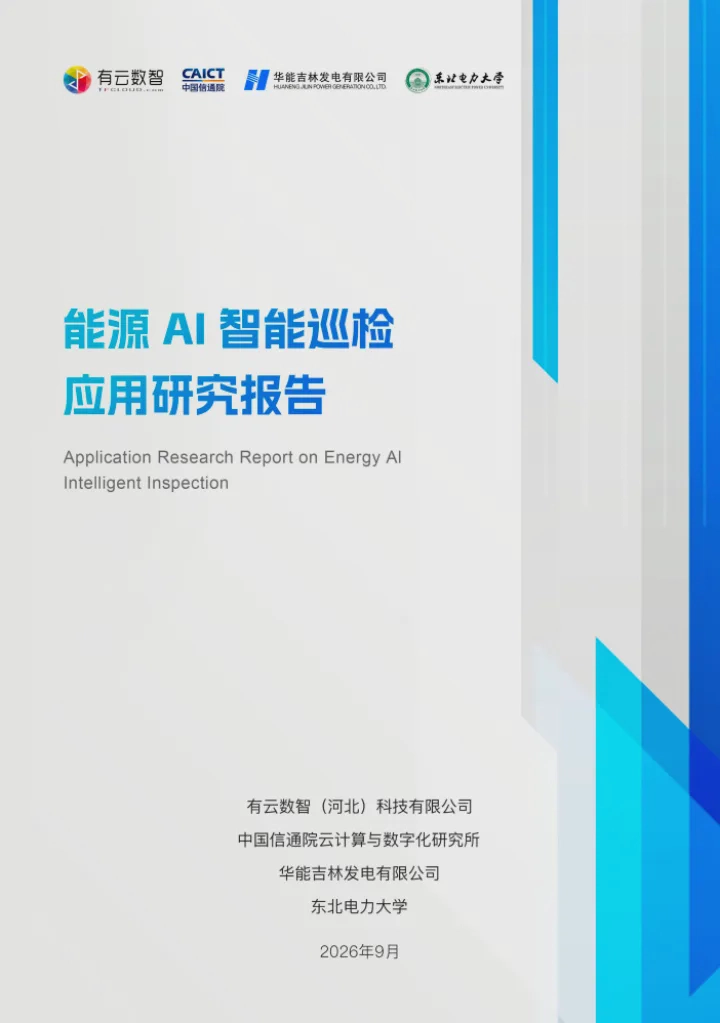
To download the full version of the report, please long-press to scan the QR code below.